Mosquito Meets Crystal
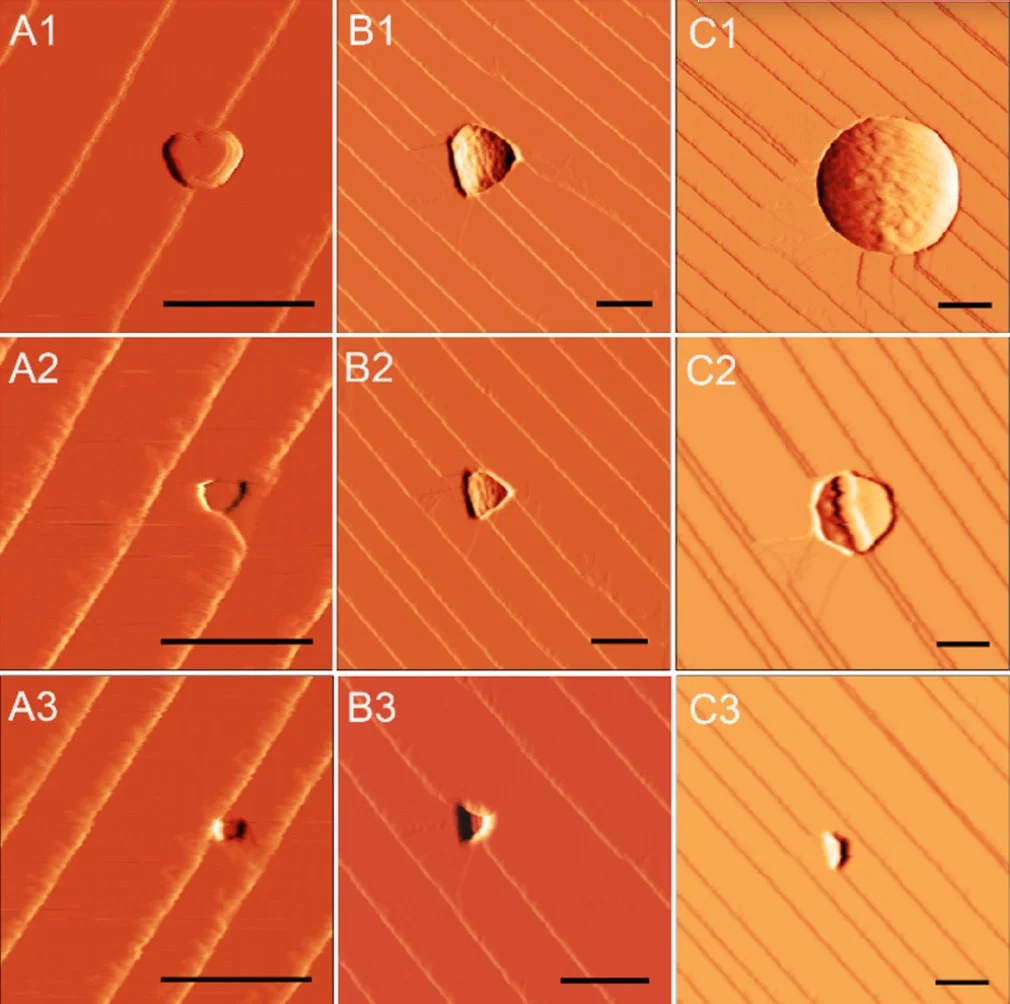
In a recent Accounts of Chemical Research article, MDI investigators review their progress in the discovery and use of high energy crystal polymorphs of contact insecticides used to combat vector-borne diseases, including malaria, a disease afflicting more than 250 million people annually according to the World Health Organization (WHO). Indoor residual spraying (IRS) of crystalline contact insecticides and insecticide-treated bed nets (ITNs) decorated with insecticide crystals are estimated to have reduced malaria mortality in Africa by 60% in the 21st Century. Resistance now threatens malaria control, however, spurring the development of new insecticides, a process that requires substantial resources, discovery time and environmental risks. This Account provides a brief history of contact insecticides and describes discoveries from our laboratories that suggest paths to faster-acting contact insecticides based on the engineering of solid-state forms, either amorphous or crystalline polymorphs, thereby potentially obviating the need for new chemicals. Prior to our 2017 report on the structure of a second solid form of DDT, crystal polymorphism was not optimized for contact insecticides. The work described in this Account demonstrate a link between thermodynamic crystal stability and insect knockdown speed associated with increased bioavailability of insecticide molecules at the surfaces of higher energy polymorphs. Notably, a new form of deltamethrin was 12 times more active than the commercial form, and the least stable polymorph of imidacloprid was six and nine times more active against susceptible Some of these metastable polymorphs were found to be stable against transformation to their thermodynamically stable forms for months in an idealized laboratory setting, approaching World Health Organization (WHO) guidelines for practical use. The observation of differing polymorph effectiveness demonstrates that tarsal absorption of molecules from the crystal surfaces by insects is a key step, and likely a limiting step, in the insecticidal action. Indeed, a persistently amorphous form of deltamethrin dispersed on chalk exhibited dramatically increased efficacy against deltamethrin-resistant Anopheles mosquitoes from Burkina Faso, revealing that an increased rate of insecticide uptake overwhelmed all the resistance mechanisms tested. Collectively, this work argues that manipulation of the solid-state chemistry of contact insecticides is a viable strategy for mitigating insect-borne diseases, and one that should be considered along with others in integrated vector management. Find the publication here.