The Ward group in the Department of Chemistry
the intersection of organic solid-state chemistry, materials science, and biomedical chemistry.
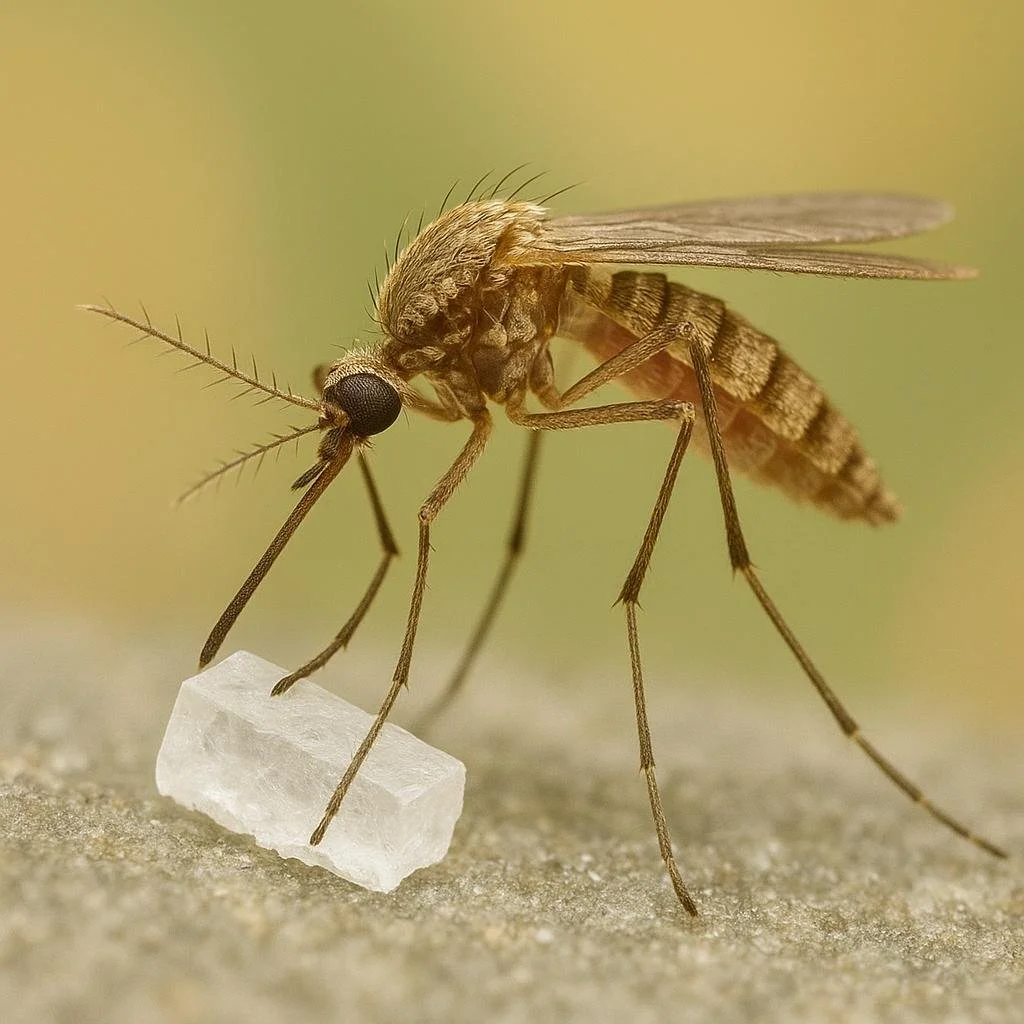

Graduate students Anna Yusov and Allie Dillon, along with Merck collaborators Mohammad T. Chaudhry, Justin A. Newman and Alfred Y. Lee, reported a comprehensive investigation aimed at benchmarking the utility of guanidinium organosulfonate (GS) host frameworks for structure determination of guest molecules for which X-ray structure determination can be elusive, such as liquids and olis. The team expanded on previous results through a head-to-head comparison of the GS method with adamantoid "molecular chaperones,” which have been reported to be useful hosts for structure determination. Inclusion compounds limited to only two GS hosts are characterized by low R1 values and Flack parameters, infrequent disorder of host and guest, manageable disorder when it does exist. The structure of some target molecules that were not included or resolved using the adamantoid chaperones were successfully included and resolved by the GS hosts, and vice versa. Of the 32 guests attempted by the GS method, 31 inclusion compounds afforded successful guest structure solutions, a 97% success rate. The GS hosts and adamantoid chaperones are complementary with respect to guest inclusion, arguing that both should be employed in the arsenal of methods for structure determination. Furthermore, the low cost of organosulfonate host components promises an accessible route to molecular structure determination for a wide range of users. The work was reported in ACS Materials Letters. Find the publication here.

In a demonstration of adaptive guest inclusion in a new aliphatic guanidinium monosulfonate hydrogen-bonded framework, graduate students Allie Dillon and Anna Yusov, along with NYU collaborators Krystyna M. Demkiw, K. A. Woerpel, and Merck collaborators Mohammad T. Chaudhry, Justin A. Newman ,and Alfred Y. Lee, discovered crystalline inclusion compounds based on a new aliphatic host – guanidinium cyclohexanemonosulfonate – which surprisingly exhibits four heretofore unobserved architectures, as described by the projection topologies of the organosulfonate residues above and below hydrogen-bonded guanidinium sulfonate sheets. The inclusion compounds adopt a layer motif consisting of the guanidinium sulfonate sheets interleaved with guest molecules, resembling a mille-feuille pastry. The aliphatic character of this remarkably simple host, combined with access to greater architectural diversity and adaptability, enables the host framework to accommodate a wide range of guests and promises to expand the utility of guanidinium organosulfonate hosts. The work was published in a special issue of Crystal Growth & Design dedicated to the renowned crystallographer Dr. Olga Kennard. Find the article here.

In a special issue dedicated to Martin Pope, a pioneer of organic electronics, graduate studnets Anna Yusov and Alexandra Dillon report that guanidinium organosulfonate (GS) hydrogen-bonded frameworks (HBFs) constructed from three different naphthalenesulfonates incorporate the electron acceptor tetracyanoquinodimethane (TCNQ) as a guest molecule, with framework architectures that reflect synergy between the persistent 2D hydrogen-bonded GS network and donor-acceptor interactions. The spectroscopic and computational results confirm weak charge-transfer interactions associated with the formation of mixed stacks containing naphthalene donors and TCNQ acceptors that are enforced by the GS framework, suggesting opportunities for the synthesis of new optoelectronic materials through a combination of molecular and crystal design. Find the article here.

Crystallization from the melt can allow the achievement of high driving force for crystallization accompanied by relatively slow growth, nucleation, and transformation rates, features that favor its use as an efficient polymorph screening method. Surprisingly, even though melt crystallization has a long history, it has been employed less often in the search for new polymorphs than solution crystallization. In a study of 21 well-characterized compounds with at least five ambient polymorphs, MDI investigators found that melt crystallization afforded more than half of the known polymorphs and in many cases revealed new polymorphs not detected by other screening methods. A statistical analysis revealed that polymorphs grown from the melt have a greater propensity for high Z′ values, which are not easily accessible by other crystallization protocols and are often not detectable by crystal structure prediction methods. Melt crystallization within nanopores (8–100 nm) performed for 19 of the 21 compounds mostly resulted in polymorphs that dominated crystallization from the bulk melt at similar temperatures. The total number of polymorphs observed in nanopores was less than that observed during crystallization from the bulk melt, however, and melt crystallization under confinement revealed new polymorphs not detected by other crystallization methods. Find the article here.

MDI investigators previously discovered that the efficacy of crystalline contact insecticides depends on the crystalline form (a.k.a. polymorphs). Polymorphism in contact insecticides, however, and its importance to efficacy, was largely unknown to the vector control community. Crystallographic characterization of contact insecticide solids needs to be systematic to identify more active solid forms. Here, the investigators report seven new crystal structures, mostly pyrethroid insecticides recommended by the WHO for indoor residual spraying, as well as a new form of a neonicotinoid insecticide. These results further highlight polymorphism in contact insecticides.

In a collaboration with the Woerpel group at NYU, graduate student Alexandra Dillon and Research Professor Tony Hu captured 2-chloropropiophenone in a hydrogen-bonded host framework generated from guanidinium and 4,4’-biphenyldisulfonate ions to produce a crystalline inclusion compound, which permitted the determination of the conformation of the 2-chloropropiophenone guest with single crystal X-ray diffraction. The observed conformation corroborated the stereoselectivity observed upon nucleophilic attack by allylmagnesium halide at the most accessible diastereoface of the lowest-energy conformations of the ketone.

Alex Shtukenberg, Bart Kahr and Mike Ward, along with Rutgers collaborators Longqin Hu and Amrik Sahota, summarize their findings on the unusual mechanisms of cystine crystal growth, growth inhibition by “molecular imposters,” and mouse model studies toward a therapy for the prevention of cystine kidney stones. See the article in Accounts of Chemical Research.

Two newly discovered University of Minnesota Videos on Hydrogen Bonding, by way of Travis Holman by way of Joel Bernstein. Click here for Video 1 and here for Video 2..
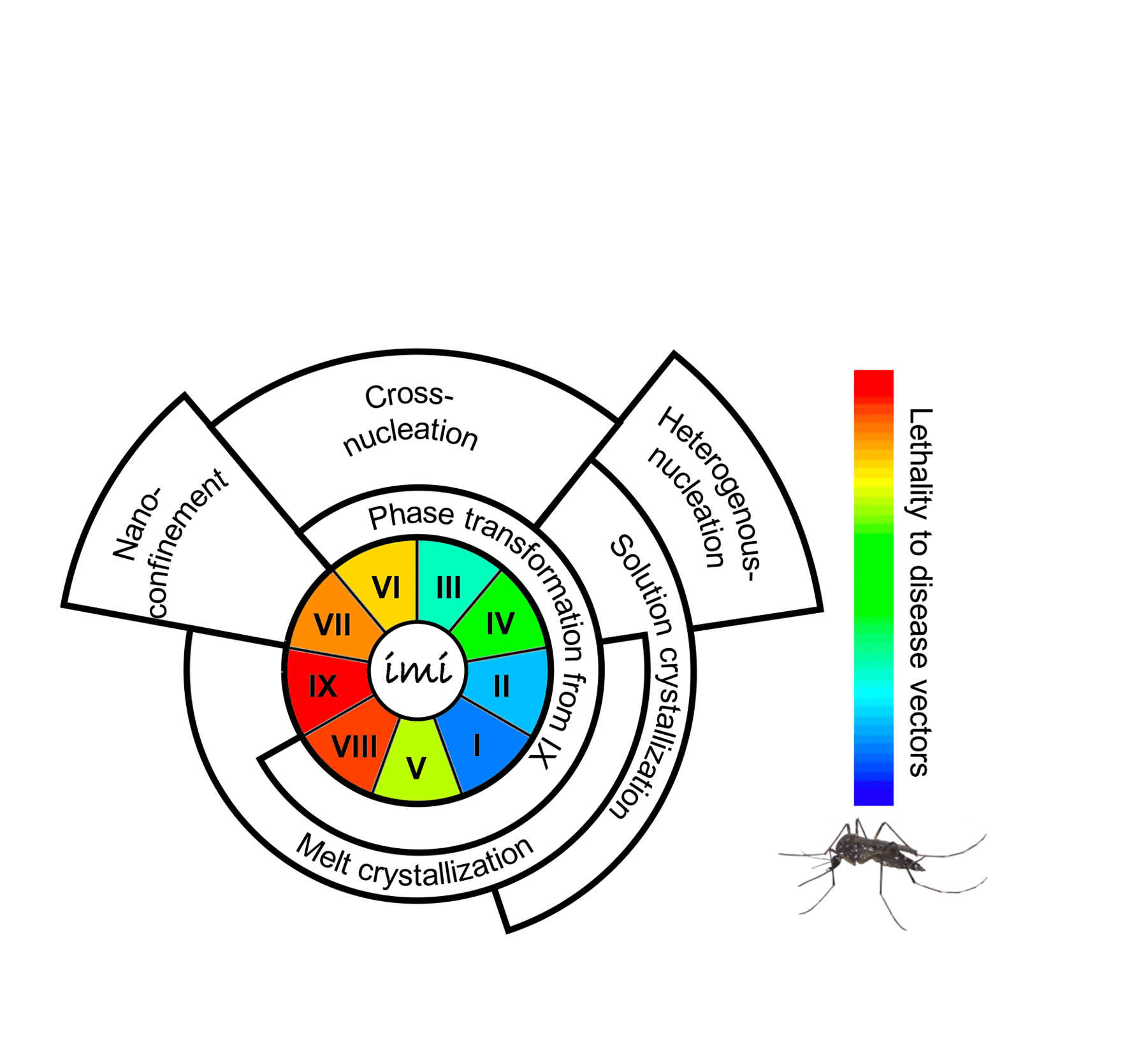
MDI Investigators discover seven new crystal polymorphs of imidacloprid, the world’s leading insecticide,, adding to two known forms. Anticipating that insect uptake of imidacloprid molecules would depend on the respective free energies of crystal polymorph surfaces, measurements of insect knockdown times for the metastable crystal forms were as much as nine times faster acting than the commercial form against Aedes, Anopheles, and Culex mosquitoes as well as Drosophila (fruit flies). Their results suggest that replacement of commercially available imidacloprid crystals (a.k.a. Form I) in space-spraying with any one of three new polymorphs, Forms IV, VI, IX, would suppress vector-borne disease transmission while reducing environmental exposure and harm to nontarget organisms. Find the article here.